Wednesday, February 20, 2008

Copyright, MP3s, and The Future of Music

I presented on this topic in Saskatoon at Showcase 2008 on Feb 21, 2008.

You can get a PDF of all the slides in the presentation here. If you really want to confuse yourself, you can get a PDF of the slides plus my notes as well. I make no promises about the quality or even sensibility of these notes.

You can get more information on the Canadian DMCA at Michael Geist's blog.

Here are links to information used in my presentation:

RIAA links

General links

Tuesday, December 04, 2007

The structure of the earth

Use the following websites to find out more about the structure of the earth.

Answer the following questions on a sheet of paper using the websites above.

  1. Name the four layers of the Earth in order from the outside to the center of the Earth.
  2. How thick is each layer?
  3. What are the parts of the crust that move around on the surface of the earth?
  4. What causes the mantle to "flow"?
  5. What are the two main metals that make up the outer and inner core?
  6. What is the Lithosphere?
  7. What is the Atmosphere?

Tuesday, November 27, 2007

Heat Transfer

Good morning!

Today we'd like you to spend a bit of time learning about Heat Transfer. There are three types of heat transfer: Conduction, convection, and radiation.

While you watch the Conduction video below, answer the following questions:

1. What is an example of a poor conductor?
2.
What is an example of a good conductor?
3. Describe how heat energy moves in Conduction.


While you watch the Convection video below, answer the following questions:

3. How does a furnace heat your home using convection?
4. What makes a hot air balloon rise?
5. How does heat energy move in conduction?
6. List three examples of convection.


While you watch the Radiation video below, answer the following questions:

7. How does the sun transfer heat to you?
8. What form does radiation travel in?
9. List three examples of heat radiation.


Now you need to make a summary of the three types of heat transfer by going to this website. If you want a more advanced website you can go here.

Tuesday, November 13, 2007

Hodgeville Audacity

Good Morning!

Today we're going to get a sound clip from Ice Age to work on in Audacity.

Tuesday, May 15, 2007

The Second Adventure of the 3 Cyber Pigs

Hello again!

Today we'll be working on the Second Adventure of the Three Cyber Pigs. This online adventure, called Cybersense and Nonsense deals with netiquette, stereotyping and bias, and how to know the difference between fact and opinion.

Urban legends and Myths

If you ever want to verify some information that seems "suspicious" then Snopes is the place to go.

Here are links to some of the stories we talked about in Waldeck.

Tuesday, April 03, 2007

Good morning Grade 6!

The online activity Cyber Playground: The First Adventure of the Three Cyber Pigs can be found here.

Monday, April 02, 2007

Hello Grade 8!

The Internet Awareness activity Jo Cool or Jo Fool can be found here.

Thursday, March 22, 2007

Greek Myths

Here are some good Greek Mythology links that can be used in the classroom to add to a Mythology unit. These are all taken fr

  • General Greek Mythology information. This site is a great starting point for any Greek Myth information including pronunciation keys and a huge dictionary of Greek Mythology.
  • The Mythweb includes an encyclopedia of Greek Mythology and many re-told myths enhanced by simple animations. This is a fun resource.
  • The Theoi Project is a comprehensive guide to the gods (theoi), spirits (daimones), fabulous creatures and monsters (theres) of ancient Greek mythology.
  • The Myth Man is another Greek Myth information site that includes a wealth of information on Greek Myths.

The Second Adventure of the Three Cyber Pigs

Hello again!

Grade 3-4:

Today we'll be working on the Second Adventure of the Three Cyber Pigs. This online adventure, called Cybersense and Nonsense deals with netiquette, stereotyping and bias, and how to know the difference between fact and opinion.

Thursday, March 15, 2007

Edublogs

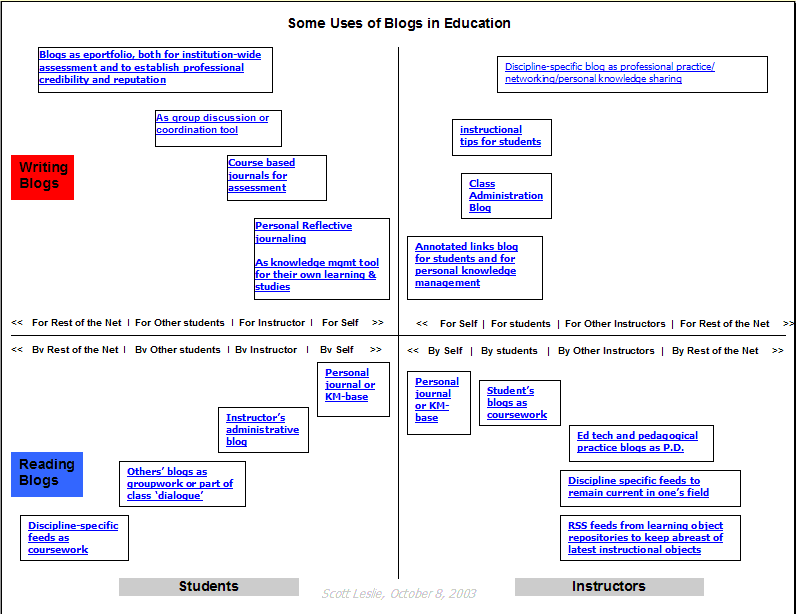
An Edublog is a blog used for educational purposes. There are as many educational uses for blogs as there are teachers and students. Here are some links to get you thinking about ways to develop and use Edublogs.

Monday, March 12, 2007

Waldeck Again!

Grade 9
Here is the link to the Media Awareness Network's resources on online hate.

The martinlutherking.org site is a good example of online hate propaganda.

Tolerance.org is a good site that works to combat hate and racism. This site has a list of Tool for Tolerance.

Thursday, March 08, 2007

Waldeck!

Hello Waldeck!

Grade 3-4
The online activity Cyber Playground: The First Adventure of the Three Cyber Pigs can be found here.

Grade 7
The Internet Awareness activity Jo Cool or Jo Fool can be found here.

Wednesday, November 22, 2006

I Know That

I Know That is a great educational site for grades 1-8. The sound and animation quality is excellent and the interactive activities are engaging and well-done.

I've spent hours on this site and haven't found everything yet, but what I have found has been great.

Wednesday, November 15, 2006

Educational Games

Here are some of the online educational games we looked at in Neville.

English Language Arts

Math

  • Arcade games on FunBrain (little educational value, but develops hand-eye coordination, mouse use, and keyboard use

Tuesday, November 14, 2006

Neville School

I used the following links in Neville school. We were talking about online safety and Net Smarts.

Thursday, November 09, 2006

Vanguard Blogs

While I was in Vanguard, we made some blogs, including Mrs. Senicar's Class blog.

Wednesday, November 08, 2006

Thursday, November 02, 2006

Wikipedia

I love Wikipedia.

According to Wikipedia, "Wikipedia is a multilingual, Web-based free content encyclopedia project." Think of a huge encyclopedia on the Net that anyone can edit when they see errors or ommisions, and you're thinking about Wikipedia.

Wikipedia is a perfect example of what many people call New Media, because anyone can contribute to the articles. This scares a lot of people. How can you trust the articles? How do you know they're accurate?

Well, it turns out that Wikipedia is fairly accurate on most topics that aren't controversial, such as science or history. When a topic is controversial, discussions take place about the authenticity of the information. Think of it as an online encyclopedia where the writers have open debate about accuracy.

If you haven't seen Wikipedia, I recommend you take a look at it. It's a great resource for general information and it works well as a starting point for the discussion of New Media.

Thursday, October 26, 2006

Presenteeism

You're right, this isn't really about technology, but it is about education. It's long been my opinion that teachers don't take sick days when they should. There are many reasons for this including the fact that it's very, very hard to prepare for a sub sometimes. Another reason can only be described as dedication.

I understand these reasons completely, but I've often wondered if we'd be better off as a society if everyone (not just teachers) stayed home when they felt sick. Well, thanks to a Cornell University study, I now have an idea how much it costs our economy.

According to the study, the US economy loses about $150 billion every year due to presenteeism, the habit of going to work when you're not feeling well. This economic loss is caused by poor productivity by sick workers and, of course, the spread of disease from employee to employee.

The CBC has more information on presenteeism and some tips on dealing with the Flu here.